
Sidra Intelligence
Market Reports
Quarterly healthcare real estate analysis across the nation's top markets.
Q3 2026
— 19 markets
New York, NY — Q3 2026
New York's medical office market is showing real resilience — overall vacancy sits at 10.5% with 472,000 square feet of new space delivered, and demand is recovering with positive absorption after several quarters of decline. Single-story medical office vacancy is an exceptionally tight 3.7% compared to 11.9% for multi-story, rents grew 3.6% over the past year, and the construction pipeline is slowing to just 321,000 square feet — a combination that puts well-positioned healthcare practices at a distinct advantage.

New Jersey — Q3 2026
New Jersey's medical office market is outperforming expectations — vacancy has tightened considerably as healthcare practices continue to expand across the state's dense suburban corridors. With limited new construction in the pipeline and strong absorption driven by demand from health systems and specialty practices, providers who understand the local market dynamics are finding meaningful opportunities to secure favorable terms before conditions tighten further.

Philadelphia, PA — Q3 2026
Philadelphia's medical office market is demonstrating steady resilience — vacancy remains well below the national average as healthcare practices continue to expand across the region's established suburban submarkets. With a limited construction pipeline and sustained demand from health systems and specialty groups, providers who move decisively will find meaningful leverage before the market tightens further.

Washington, DC — Q3 2026
Washington DC's medical office market benefits from one of the most stable healthcare demand bases in the country — anchored by federal health agencies, major academic medical centers, and a dense concentration of specialty practices. Vacancy remains tight and rents continue to climb, creating a market where healthcare providers who understand the local dynamics hold a meaningful edge in securing quality space.

San Diego, CA — Q3 2026
San Diego's medical office market is one of the most supply-constrained in the nation — driven by a booming life sciences sector, a dense concentration of specialty practices, and limited developable land. Vacancy in single-story buildings is exceptionally tight, rents are among the highest in the country, and healthcare providers who delay their real estate decisions face a shrinking set of quality options.

Los Angeles, CA — Q3 2026
Los Angeles medical office vacancy has held steady at 9.4% despite broader office market turbulence, with single-story buildings at a tight 5.2%. Rents have climbed to $42.30 per square foot full service — among the highest in the nation — and with only 312,000 square feet under construction, healthcare providers face a market where quality space commands a significant premium.

Phoenix, AZ — Q3 2026
Phoenix medical office vacancy stands at 12.3% overall, but single-story buildings — the format most healthcare practices prefer — are running at just 7.2%. Rent growth has cooled to 0.7%, well below the five-year average of 4.5%, and 558,000 square feet is under construction, creating more options but also more competition. Investors closed approximately $653 million in transactions last quarter, a 4% increase, signaling continued confidence even as the market shifts in favor of tenants who know how to negotiate.

Atlanta, GA — Q3 2026
Atlanta's medical office market is one of the tightest in the country — overall vacancy is just 8.4%, and single-story spaces, which healthcare practices consistently prefer, are at a remarkable 4.9%. Average rents are around $28.14 per square foot with 1.4% growth over the past year, new construction remains limited keeping competition for quality space intense, and medical office buildings are trading at a premium to traditional offices — a clear signal of strong and sustained investor conviction in the market.

Denver, CO — Q3 2026
Denver's medical office market is outperforming traditional office by a wide margin — vacancy sits at just 10.6% compared to 19% for conventional space, with single-story buildings even tighter at 7.8%. Rents are rising 2.6%, only 120,000 square feet of new medical office space is under construction, and investors closed $229 million in transactions last quarter, signaling strong and sustained confidence in the market.

San Francisco, CA — Q3 2026
While traditional office vacancy in San Francisco exceeds 22%, medical office tells a completely different story — vacancy sits at just 10.6%, with single-story buildings even tighter at 8%. Rents have climbed to $55.10 per square foot full service, and with only 245,000 square feet under construction, the limited pipeline means healthcare providers who act now have the best shot at favorable terms before the market tightens further.

Nashville, TN — Q3 2026
Nashville's medical office market is running out of room — single-story vacancy sits at just 2.8%, overall vacancy at 6.4%, and only 17,000 square feet of new space is under construction. With rents hitting record levels at $34.55 per square foot full service, the flight to quality is intensifying and healthcare providers who wait to evaluate their options will face fewer choices and less leverage.
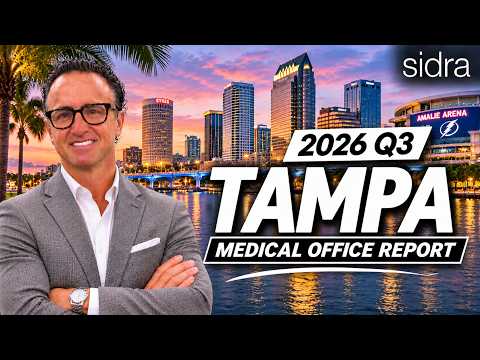
Tampa Bay, FL — Q3 2026
Tampa Bay medical office rents have surged 4.6% in just one year, reaching $30.86 per square foot — and high-quality space is increasingly hard to find at a 6.8% vacancy rate. With major health systems expanding, only 179,000 square feet under construction, and more practices choosing to buy rather than lease, healthcare providers who delay their real estate evaluation are losing ground fast.

Houston, TX — Q3 2026
Houston's headline 15% medical office vacancy rate masks a more nuanced story — the market absorbed over 900,000 square feet last year, and single-story buildings sit at a much tighter 10.9% versus 19.8% for multi-story. With rents softening slightly and new construction slowing to just 424,000 square feet, healthcare providers have a rare window to negotiate favorable terms before the supply gap closes.

Boston, MA — Q3 2026
Boston's medical office vacancy has tightened to 6.8% — down 70 basis points over the past year — with single-story buildings at a razor-thin 2.6%. Investors are returning with $277 million in sales over the past year, and only 150,000 square feet are under construction. For healthcare providers, the window to negotiate from a position of strength is closing.

Minneapolis, MN — Q3 2026
Minneapolis medical office vacancy sits around 7% overall — but single-story buildings are down to just 4%. With only 7,100 square feet currently under construction (a stark drop from pre-pandemic levels), landlords are pushing rents higher and owner-users are increasingly buying rather than leasing. Healthcare providers who wait may find their options shrinking fast.

Seattle, WA — Q3 2026
Seattle's medical office market is one of the most supply-constrained in the country — vacancy sits at just 7.1% with single-story buildings at 4.3%. Rents have risen 3.8% over the past year to $38.90 per square foot, and with minimal new construction in the pipeline, healthcare providers who delay their space decisions face a shrinking set of options.

Chicago, IL — Q3 2026
Chicago's medical office market is bifurcating sharply — while overall vacancy sits at 13.2%, single-story buildings preferred by healthcare practices are running at just 6.8%. With 1.1 million square feet under construction concentrated in suburban submarkets and rents rising 2.1%, practices that understand the difference between commodity space and strategic locations will find meaningful opportunities others miss.

Cleveland, OH — Q3 2026
Cleveland's medical office vacancy has fallen to a historic low of 5.6% — the tightest it has been in a decade — with 113,000 square feet of positive absorption recorded and availability in newer buildings at just 2.5%. Average rents are around $21.45 per square foot with stronger growth in established submarkets, and less than 5,000 square feet of new medical office space was added in all of 2025, creating a severely supply-constrained environment where healthcare practices that understand how to evaluate and negotiate their real estate options hold a meaningful edge.

Dallas, TX — Q3 2026
Dallas medical office vacancy sits at 11.8% overall, but the single-story segment — where most healthcare practices operate — is considerably tighter at 8.1%. With 687,000 square feet under construction and rents rising 1.9%, the market is evolving quickly and practices that move decisively will secure better terms than those who wait.